
Introduction
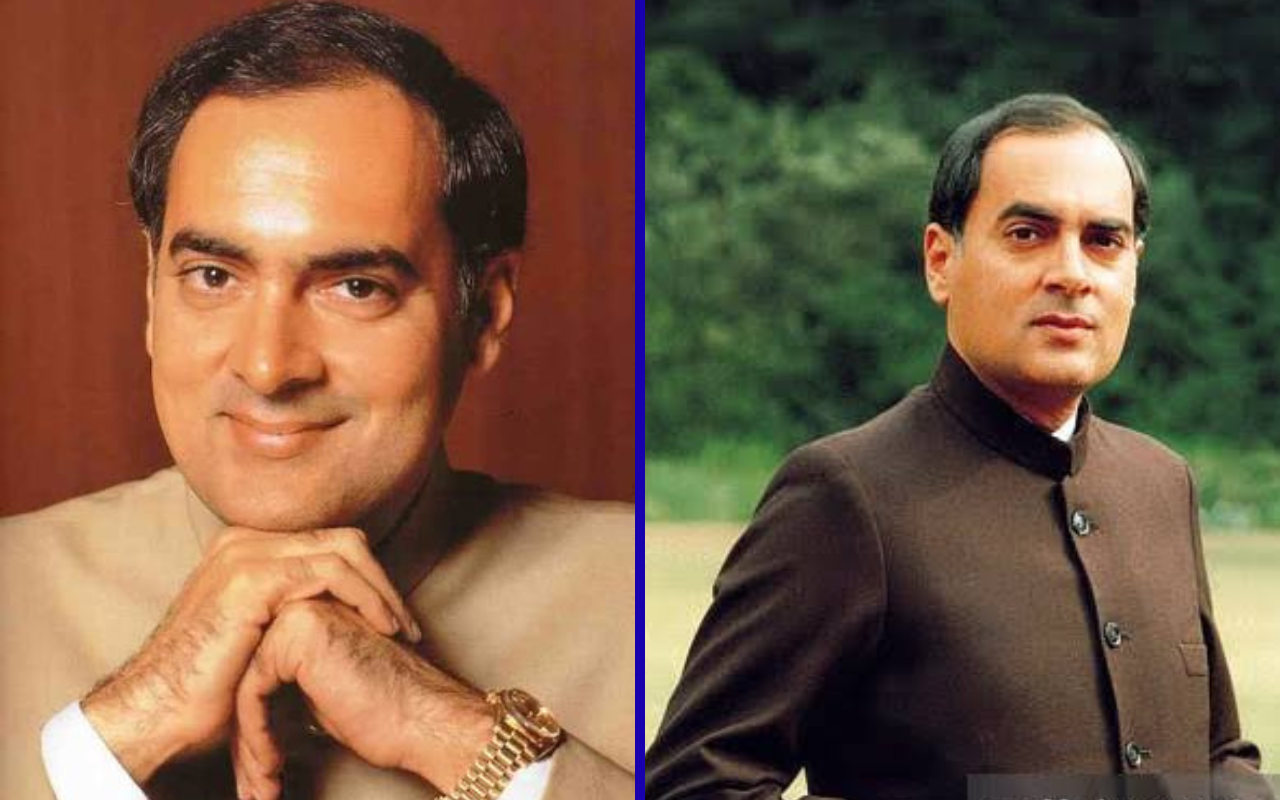
Rajiv Ratna Gandhi, popularly known as Rajiv Gandhi, was one of the most prominent political figures in modern Indian history. Born on August 20, 1944, he became the sixth Prime Minister of India and served from October 31, 1984, until December 2, 1989. His rise to the country’s highest political office came unexpectedly after the assassination of his mother, Prime Minister Indira Gandhi. At only 40 years old, Rajiv Gandhi became the youngest person to serve as Prime Minister of India at that time. His political career was marked by ambitious plans for modernization, technology, education and administrative reform, but it was also shaped by serious political controversies and difficult national challenges.
Rajiv Gandhi’s Early Life and Family Background
Rajiv Ratna Gandhi was born on August 20, 1944, in Bombay, now Mumbai. He was the elder son of Feroze Gandhi and Indira Gandhi. His mother was the daughter of Jawaharlal Nehru, India’s first Prime Minister, making Rajiv a member of one of India’s most influential political families. His younger brother was Sanjay Gandhi, who also became involved in Indian politics.
Rajiv grew up during a period when India was moving toward independence and subsequently building its new democratic institutions. His family home was closely connected with the country’s political life because his grandfather and mother were major figures in the Indian National Congress and the national independence movement.
Despite his family background, Rajiv did not initially appear interested in following a political career. Unlike his mother and younger brother, he showed a strong interest in technical subjects and aviation. His early life was therefore shaped more by education and personal interests than by an immediate desire to enter politics.
Education and Career as a Pilot
Rajiv Gandhi received his early education at institutions including the Doon School in Dehradun. He later went to the United Kingdom for higher education, studying at Trinity College, Cambridge, and later at Imperial College London, although he did not complete a university degree.
His interest in aviation became an important part of his life. Rather than immediately entering politics, he trained as a pilot. After returning to India, he joined Indian Airlines as a professional pilot. For several years, aviation was his principal career.
Rajiv’s work as a pilot distinguished him from many members of his political family. He had a professional life outside politics and generally maintained a relatively private lifestyle. His marriage to Sonia Maino, an Italian-born woman whom he had met while studying in Cambridge, also became an important part of his personal life. The couple married in 1968 and later had two children, Rahul Gandhi and Priyanka Gandhi.
Rajiv Gandhi’s Entry Into Politics
Rajiv Gandhi’s entry into politics was largely influenced by events within his family. His younger brother Sanjay Gandhi, who had become increasingly active in the Congress Party, died in an airplane crash in June 1980. Sanjay’s death had a profound effect on the Gandhi family and changed Rajiv’s future.
Rajiv initially resisted political involvement, but after his brother’s death he gradually became active in the Congress Party. He contested elections and entered the Lok Sabha from Amethi, the constituency previously represented by Sanjay.
His political responsibilities increased rapidly. He became a general secretary of the Congress Party and was involved in organizational work. His background as a pilot and relative lack of long-term political experience gave him a different image from traditional career politicians.
Supporters viewed him as a modern and comparatively youthful leader who could bring new ideas into Indian politics. He spoke about using technology and scientific development to transform the country’s economy and administration.
Becoming Prime Minister After Indira Gandhi
Rajiv Gandhi’s life changed completely on October 31, 1984, when his mother, Prime Minister Indira Gandhi, was assassinated by two of her Sikh bodyguards. The assassination occurred during a period of severe political tension following Operation Blue Star and conflict surrounding the Golden Temple in Amritsar.
Following his mother’s death, Rajiv Gandhi was sworn in as Prime Minister. He was only 40 years old and became the youngest Prime Minister in India’s history at that time.
The circumstances surrounding his appointment were deeply tragic. He inherited leadership of a country experiencing political violence, communal tension and uncertainty. His immediate challenge was to stabilize the nation while also preparing for a general election.
The 1984 general election produced an overwhelming victory for the Congress Party. Under Rajiv Gandhi’s leadership, Congress won an exceptionally large majority in the Lok Sabha. The result gave him a powerful parliamentary mandate and allowed his government to pursue an ambitious modernization agenda.
Rajiv Gandhi’s Vision of a Modern India
One of the defining features of Rajiv Gandhi’s political career was his emphasis on modernization. He believed India needed to move toward advanced technology, better communications and a more efficient administrative system.
His government encouraged the development of computers and telecommunications and promoted the use of modern technology in government and industry. Rajiv frequently spoke about preparing India for the twenty-first century.
This vision was significant because India at the time had a highly regulated economy and a large bureaucratic system. Rajiv sought to reduce some outdated restrictions and encourage technological progress.
His government also focused on expanding telecommunications networks and improving access to modern communications. The policies associated with his administration contributed to the broader development of India’s information-technology and telecommunications environment in later decades.
Rajiv Gandhi also supported improvements in education and scientific research. He believed that India’s young population could become a major national strength if given better educational and technological opportunities.
Political Reforms and Challenges
Rajiv Gandhi’s government introduced several important political and administrative measures. One of the most notable was the reduction of the voting age from 21 to 18 through the 61st Constitutional Amendment. This change brought millions of younger Indians into the democratic process.
His administration also supported the strengthening of local government institutions. The broader effort was aimed at bringing decision-making closer to ordinary citizens and improving democratic participation.
At the same time, Rajiv Gandhi’s government faced significant criticism. His administration struggled with political scandals, internal party divisions and difficult regional conflicts. The Bofors controversy became one of the most damaging issues associated with his government.
The controversy concerned allegations involving payments and commissions connected with a major defence contract. Although Rajiv Gandhi himself denied wrongdoing, the controversy seriously damaged his government’s reputation and became an important issue during the 1989 election.
His government also faced challenges in Punjab, Assam, Sri Lanka and other regions. These problems demonstrated the difficulty of governing a large and diverse country experiencing social and political tensions.
Rajiv Gandhi and Foreign Policy
Rajiv Gandhi’s foreign policy reflected both India’s traditional commitment to non-alignment and his interest in building stronger relationships with major international powers. He travelled extensively and attempted to increase India’s diplomatic influence.
One of the most controversial aspects of his foreign policy was India’s involvement in Sri Lanka. In 1987, India and Sri Lanka signed the Indo-Sri Lanka Accord, and India sent the Indian Peace Keeping Force to Sri Lanka.
The intervention was intended to help implement the agreement and stabilize the situation, but it became highly controversial. Indian troops became involved in fighting the Liberation Tigers of Tamil Eelam, or LTTE, rather than simply performing a peacekeeping role.
The Sri Lankan conflict eventually had a profound impact on Rajiv Gandhi’s own life. His involvement in the conflict contributed to the hostility that later resulted in his assassination by an LTTE suicide bomber.
The 1989 Election and Life in Opposition
Rajiv Gandhi’s government completed its five-year term, but by 1989 his political position had weakened considerably. The Bofors controversy, opposition criticism and various domestic issues contributed to the decline of support for Congress.
The 1989 general election resulted in Congress losing its previous dominance. Rajiv Gandhi resigned as Prime Minister after the election and became Leader of the Opposition.
Although he was no longer Prime Minister, he remained a major political figure. The Congress Party continued to regard him as an important leader, and he remained involved in national politics.
During this period, Rajiv was preparing for another possible political comeback. The 1991 general election was approaching, and he was campaigning across India when tragedy struck.
Rajiv Gandhi’s Assassination
On May 21, 1991, Rajiv Gandhi was assassinated at Sriperumbudur in Tamil Nadu while campaigning for the general election. A woman associated with the LTTE approached him during an election gathering and detonated an explosive device.
Rajiv Gandhi and numerous other people were killed in the attack. His assassination shocked India and the international community. He was only 46 years old.
The assassination was directly connected to the Sri Lankan conflict and the role India had played there during his premiership. The attack brought an abrupt end to the political career of a leader who had entered politics only a little more than a decade earlier.
His death also had a major impact on the 1991 Indian election and on the future of the Congress Party. The party eventually formed a government under P. V. Narasimha Rao, while Rajiv Gandhi’s widow, Sonia Gandhi, later became an important figure in Congress politics.
Rajiv Gandhi’s Legacy and Bharat Ratna
Rajiv Gandhi’s legacy remains complex. Supporters remember him as a modernizing leader who promoted computers, telecommunications, education and scientific development. Many of the technological changes encouraged during his administration later became important foundations for India’s emergence as a major information-technology and services economy.
His reduction of the voting age to 18 also had a lasting impact on Indian democracy by giving younger citizens a greater role in elections.
At the same time, his political record continues to be debated because of controversies such as Bofors, the Sri Lankan intervention and decisions concerning several domestic political conflicts. His relatively short political career included both ambitious reforms and serious challenges.
Rajiv Gandhi was posthumously awarded the Bharat Ratna, India’s highest civilian honour. His name has also been associated with numerous institutions, airports, universities, roads, public programs and other organizations across India.
His political legacy also continued through his family. His children, Rahul Gandhi and Priyanka Gandhi, later became prominent figures in Indian politics, while Sonia Gandhi became one of the most influential leaders of the Congress Party.
Conclusion
Rajiv Ratna Gandhi’s life was one of extraordinary change. He began as a young man interested in aviation and worked as a professional pilot before entering politics because of a devastating family tragedy. His brother’s death brought him into public life, and his mother’s assassination unexpectedly placed him at the head of the Indian government.
As Prime Minister, Rajiv Gandhi represented a younger and more technologically focused vision of India. His government promoted computers, telecommunications, education, scientific development and political reforms while attempting to modernize a large and complicated nation. His decision to lower the voting age to 18 remains one of his important democratic reforms.
However, his time in office was also marked by serious controversies, regional conflicts and political difficulties. The Bofors controversy weakened his government, while the Sri Lankan intervention created consequences that ultimately contributed to the circumstances surrounding his assassination.
Rajiv Gandhi was killed on May 21, 1991, but his influence continued long after his death. His vision of a technologically advanced India became an important part of the country’s later development, while his political career remains the subject of continuing historical debate. Whether remembered as a modernizer, a controversial political leader or a tragic figure in Indian history, Rajiv Gandhi remains an important part of India’s political story.