
Introduction
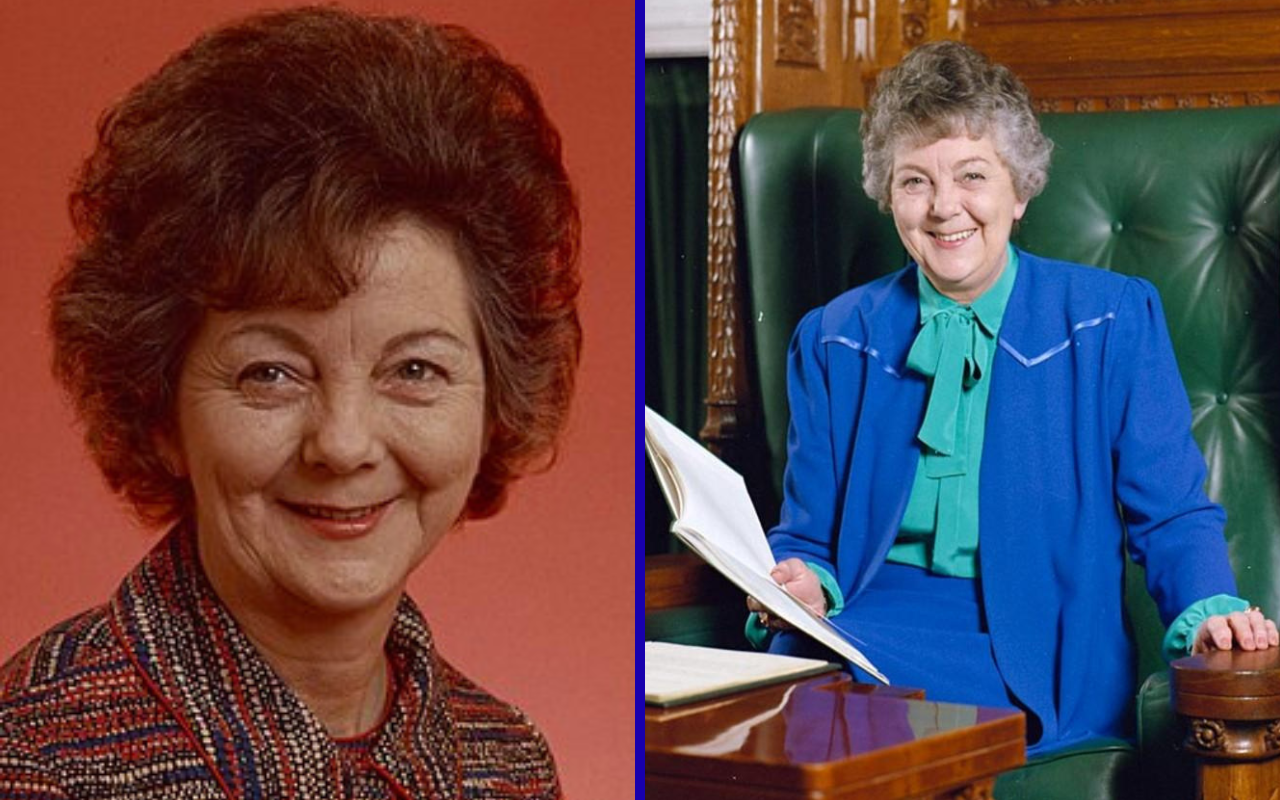
Joan Child was a pioneering Australian politician whose remarkable life reflected determination, public service and a strong commitment to social justice. Born in 1921, she experienced financial difficulties during childhood, left school at a young age, became a mother of five sons and was widowed while her children were still young. Despite these challenges, she developed a strong interest in politics and eventually became one of the most important women in Australian parliamentary history. She represented the electorate of Henty in Victoria and became the first woman from the Australian Labor Party to be elected to the House of Representatives. Her greatest achievement came in 1986, when she became the first woman Speaker of the Australian House of Representatives.
Joan Child’s Early Life and Background
Joan Child was born Gloria Joan Liles Olle on August 3, 1921, in Kew, Melbourne, Victoria. Her childhood was shaped by circumstances that were far removed from the privileged backgrounds sometimes associated with political careers. Her parents separated when she was young, and her mother faced financial difficulties while raising her children. Joan experienced several changes in where she lived during her childhood, including time in Yackandandah, Beechworth and St Kilda.
Despite the difficulties surrounding her family, Joan demonstrated academic ability. She received a scholarship to attend Camberwell Girls Grammar School, but her formal education ended when she was 15 years old. She then entered the workforce, beginning a working life that would later influence many of the political issues she cared about.
Her early experiences gave her an understanding of economic insecurity and the difficulties ordinary families could face. These experiences became particularly important after she entered politics because she was able to discuss social and economic issues from personal experience rather than simply from a theoretical perspective.
Marriage, Motherhood and Personal Challenges
In 1942, Joan married Harold “Hal” Child, who was serving in the armed forces. The couple eventually had five sons. During these years, Child’s life was primarily centered around family and work rather than federal politics.
Her life changed dramatically in 1963 when her husband died suddenly from a heart attack. She was left to raise five children and manage the family’s financial needs. The loss forced her to take on additional responsibilities at a time when opportunities for women were much more restricted than they are today.
Child worked in a variety of occupations to support her family. Her jobs included cleaning, cooking in a nursing home and working in a knitwear factory. These experiences gave her direct contact with working Australians and people facing economic pressure.
Her experiences as a working mother and widow later influenced her political views. She became particularly interested in social security, housing, employment, women’s rights and other issues affecting families and disadvantaged people.
Joan Child’s Introduction to Politics
Joan Child gradually became involved in political and community activities. She joined the Australian Labor Party in 1964 and became active in the Union of Australian Women. Through the organization, she participated in campaigns involving equal pay and other issues affecting women.
Her community involvement helped her develop political confidence. She also participated in parent organizations and other local activities, allowing her to become familiar with public speaking, organization and campaigning.
During this period, Child became connected with Labor politician Jim Cairns. Cairns would later become Deputy Prime Minister, and Child worked as his adviser after her first unsuccessful attempt to enter federal Parliament. Her work with Cairns gave her valuable experience in government and manufacturing policy.
Child first contested the federal seat of Henty in Victoria in 1972. Although she did not win, the campaign established her as a serious Labor candidate and provided a foundation for her eventual parliamentary success.
Her Historic Election to Parliament
Joan Child achieved a major breakthrough at the 1974 federal election when she won Henty. Her victory was historically important because she became the first woman from the Australian Labor Party to be elected to the House of Representatives. At that time, only a very small number of women had ever entered the House.
Her parliamentary career began during a period of considerable political instability in Australia. Child used her position to raise issues connected with social welfare, housing, health, education and the circumstances of working families.
Her first period in Parliament was short-lived. Following the dismissal of the Whitlam government in 1975, Labor suffered a major electoral defeat. Child lost Henty and left Parliament after only a relatively short period as a federal representative.
The defeat did not end her political ambitions. Instead, she continued working in industrial and political organizations and remained determined to return to Parliament.
Returning to Federal Parliament
After losing Henty, Child continued to build her experience. She worked with the Victorian State Colleges’ Staff Association and later served as an assistant to Labor politicians. She also attempted to regain Henty at the 1977 election but was unsuccessful.
Her persistence eventually paid off in 1980 when she won Henty again. This second parliamentary career proved considerably more important than her first.
Child remained the member for Henty until her retirement from federal politics in 1990. During this period, she became increasingly respected within Parliament and took on more senior responsibilities.
She was particularly concerned with making Parliament more inclusive. Her experiences as one of the few women in the House gave her a strong awareness of the importance of language and representation. She encouraged the use of more inclusive parliamentary terminology and worked to ensure that women were treated as equal participants in political life.
Becoming Australia’s First Woman Speaker
Joan Child’s greatest historical achievement came on February 11, 1986, when she was elected Speaker of the Australian House of Representatives. She became the first woman to occupy the position.
The Speaker has a crucial responsibility in the parliamentary system. The position involves maintaining order during debates, interpreting parliamentary rules, presiding over proceedings and ensuring that members follow established procedures.
Child approached the role with a calm and practical style. Rather than relying heavily on ceremonial traditions, she emphasized the authority and responsibility of the office itself. One notable decision was her choice not to adopt the traditional Speaker’s wig and robes.
Her election was a major milestone for women in Australia. At a time when women remained underrepresented in federal politics, Child’s appointment demonstrated that women could reach the highest levels of parliamentary leadership.
Her approach also reflected her personality. She was known for being practical, firm and committed to fairness. She wanted Parliament to function effectively while maintaining respect between members.
Joan Child and the New Parliament House
Joan Child occupies a particularly unusual place in Australian parliamentary history because her time as Speaker coincided with the move from Old Parliament House to the new Parliament House in Canberra.
She was the last Speaker to preside over proceedings in Old Parliament House and the first Speaker to serve in the new Parliament House when it opened in 1988.
The transition involved much more than simply moving from one building to another. The new Parliament House represented a major change in Australia’s parliamentary environment, and Child was involved in practical decisions connected with the new building.
Her responsibilities included matters involving offices, furnishings, safety, lighting and other details. She also participated in the ceremonial opening of the new Parliament House by Queen Elizabeth II.
Despite her role in the new building, Child reportedly had a particular fondness for the atmosphere of the older Parliament House. Her position as the final Speaker of one building and the first Speaker of another made her tenure especially memorable.
Her Work for Women and Social Justice
Social justice remained one of the central themes of Joan Child’s political career. Her own experiences had given her an understanding of the challenges faced by women, workers, single parents and families experiencing financial hardship.
Her political interests included women’s equality, employment, housing, health and social welfare. Her involvement with the Union of Australian Women had also helped establish her interest in equal pay and women’s rights before she entered Parliament.
Child’s achievement as the first female Speaker had significance beyond her individual career. She became an example for women who wanted to enter politics at a time when the political system remained heavily dominated by men.
Her legacy was particularly visible when Anna Burke became the second woman Speaker of the House in 2012. Burke regarded Child as an important predecessor and part of the history that made it possible for women to occupy senior parliamentary positions.
Retirement, Honours and Final Years
Joan Child retired from federal Parliament in 1990 after a long and eventful political career. Her public service was recognized through several honours. She was appointed an Officer of the Order of Australia and also received the Centenary Medal.
After leaving Parliament, she remained respected as a pioneering figure in Australian political history. Her career continued to be remembered whenever the progress of women in Australian politics was discussed.
Child died in Melbourne on February 23, 2013, at the age of 91. Her death brought tributes from political leaders and people who had worked with her throughout her long career. A state funeral was held in Melbourne in recognition of her contribution to public life.
Her death also highlighted the significance of her political journey. By the time she passed away, women had become much more prominent in Australian politics, and another woman had already occupied the Speaker’s chair she had opened to women decades earlier.
Joan Child’s Lasting Legacy
Joan Child’s legacy is based not only on becoming Australia’s first female Speaker but also on the extraordinary journey she took to reach that position. She did not come from an established political family, nor did she follow a traditional elite path into public life.
She left school at 15, worked to support herself, raised five sons and faced widowhood while her children were still young. She then entered community activism, joined the Labor Party, lost elections, returned to Parliament and ultimately reached one of the most important offices in the Australian political system.
Her repeated determination was a defining feature of her life. Losing Henty in 1975 did not prevent her from trying again. After an unsuccessful attempt in 1977, she returned to Parliament in 1980. Six years later, she became the first woman Speaker.
Her career showed that political leadership could develop from ordinary working and family experiences. Her understanding of hardship influenced the issues she supported, while her parliamentary achievements helped change expectations about women’s role in Australian politics.
Conclusion
Joan Child’s life remains an inspiring chapter in Australia’s political history. From a difficult childhood and an early departure from school to years of work, motherhood and personal hardship, she developed a strong commitment to improving society. Her experiences shaped the way she approached politics and gave her a practical understanding of the problems affecting working families and disadvantaged Australians.
Her election to the House of Representatives in 1974 made her the first Labor woman elected to that chamber. Although she lost her seat after the 1975 election, she refused to abandon her political ambitions and eventually returned in 1980. Her determination ultimately led to her historic election as Australia’s first female Speaker in 1986.
Joan Child died in 2013, but her contribution remains important. She helped demonstrate that women could overcome political and social barriers and take leading roles in Australia’s democratic institutions. Her story is therefore not simply the biography of a politician; it is also a story of resilience, equality, public service and lasting change.