
Introduction
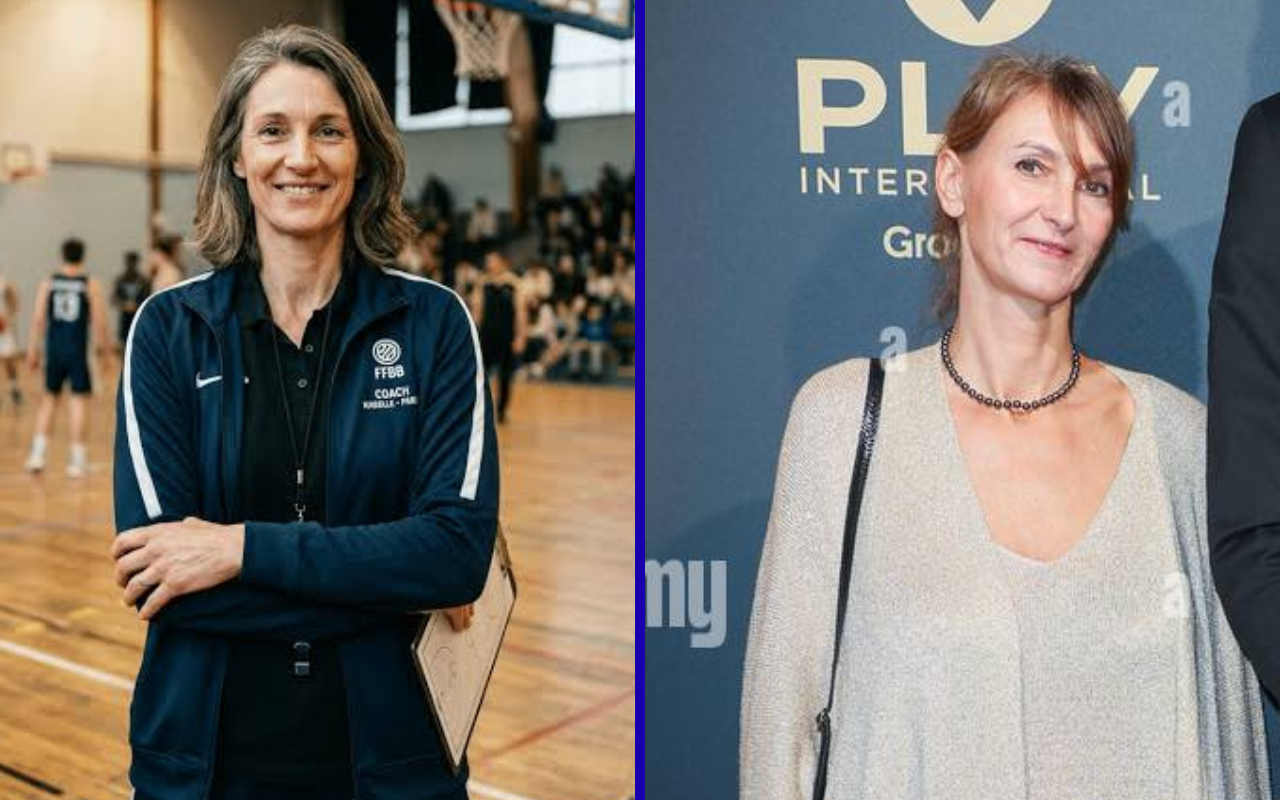
Élodie de Fautereau is a former French basketball player and coach who has attracted international attention through both her own sporting career and her role as the mother of NBA star Victor Wembanyama. Before her son became one of the most talked-about young basketball players in the world, Élodie had already built a strong connection with the sport. She competed at a high level in French women’s basketball and later moved into coaching and youth development.
Born on August 12, 1971, Élodie grew up in a family where basketball was already an important part of everyday life. Her parents, Michel and Marie-Christine de Fautereau, were also associated with basketball. This early environment helped shape her understanding of the sport and eventually influenced the next generation of the family.
Today, Élodie’s name is frequently mentioned in stories about Victor Wembanyama, but her life and career deserve attention in their own right. Her experience as a player, coach, mother, and basketball mentor has played an important role in the development of a family deeply connected to sport.
Early Life and Basketball Family Background
Élodie de Fautereau was born in France on August 12, 1971. She grew up surrounded by basketball because both of her parents had connections with the sport. Having parents who understood competitive basketball gave her an early introduction to training, competition, teamwork, and the discipline required to become a successful athlete.
Her family background helped make basketball a natural part of her life rather than simply a hobby. As she developed her own abilities, she began progressing through the French basketball system and eventually reached a high level of competition.
Reports about her early career describe her development through clubs in the Paris and Versailles region. She eventually reached Nationale 1, which at the time represented the highest level of women’s basketball in France.
Her upbringing also appears to have influenced the way she later approached basketball as a mother and coach. Rather than seeing the sport only as a professional pursuit, she understood the importance of developing skills gradually and allowing young athletes to enjoy the game.
Élodie de Fautereau’s Playing Career
Élodie developed into an accomplished basketball player and competed at a high level in French women’s basketball. Her reported senior career began in Nationale 2 in 1988 before she progressed toward the highest level of the French game.
Standing at around 1.91 metres, she had the physical characteristics of a strong interior player. Her height and experience allowed her to compete effectively around the basket and contribute through scoring and rebounding.
One of the clearest records of her playing career comes from FIBA. Its database records Élodie playing for Mosa Jambes in the 1999 Ronchetti Cup. She appeared in six games during the competition and averaged 10.2 points and 4.7 rebounds per game.
The European competition experience was an important part of her playing career because it placed her in an international basketball environment. It also demonstrates that her career extended beyond domestic French competition.
Although she did not become internationally famous in the way her son later would, her own playing career was substantial and gave her practical knowledge that would later prove valuable as a coach and parent.
Transition From Player to Coach
After her playing career, Élodie moved into coaching and basketball development. This transition allowed her to remain involved in the sport while using the experience she had gained as a player.
She has been associated with youth basketball and coaching activities, including work connected with Le Chesnay-Versailles 78. Her role in developing young players gave her an opportunity to pass on technical knowledge and an understanding of the discipline needed to succeed.
Moving into coaching was a natural progression for someone who had spent many years playing competitively. Her experience allowed her to understand the challenges young athletes face and the importance of building fundamentals before concentrating entirely on elite competition.
Her coaching background also became particularly meaningful within her own family. As her children developed an interest in basketball, Élodie was able to provide guidance based on personal experience rather than simply being a supportive parent watching from the sidelines.
Marriage and Family Life
Élodie’s family life has become an important part of her public story because of the extraordinary basketball careers developing among her children.
She and Félix Wembanyama raised their family in France. Félix has a background in athletics, particularly jumping events, providing another sporting influence within the household.
Élodie and Félix have three children: Victor, Ève, and Oscar. All three have developed connections with basketball, creating a family environment where sport has been an important part of everyday life.
The combination of Élodie’s basketball background and Félix’s athletic experience gave the children exposure to different aspects of physical development. They grew up around people who understood training, movement, competition, and the importance of developing athletic skills.
However, the family’s approach was not simply about producing professional athletes. Élodie’s background has been associated with an emphasis on balanced development, education, and allowing children to enjoy their chosen activities.
Élodie as Victor Wembanyama’s Mother
Élodie is now best known internationally as the mother of Victor Wembanyama, one of the most highly regarded basketball prospects of his generation.
Victor developed his basketball abilities in France before becoming a global star. He was selected first overall by the San Antonio Spurs in the 2023 NBA Draft, making him the first player chosen in that year’s draft.
His extraordinary height, skill, coordination, shooting ability, and defensive talent have made him a unique figure in modern basketball. However, his development was supported by a family with deep sporting knowledge.
Élodie’s influence was especially important because she understood the demands of basketball from her own experience. She knew that becoming an elite athlete required more than natural physical ability. Technical development, discipline, patience, and mental strength were also important.
Rather than attempting to control every aspect of Victor’s career, she has been described as providing support and guidance while allowing him to develop naturally.
Her role therefore represents an interesting part of Victor’s journey. She was both a mother and someone who understood the sport at a professional level.
Ève and Oscar Wembanyama
Victor is not the only member of the family with a connection to basketball. His sister Ève has also pursued basketball, while his younger brother Oscar has developed an interest in the sport.
This shared interest reflects the environment in which the children grew up. Basketball was already an important part of their mother’s life, and their father’s athletic background provided another connection to competitive sport.
Ève’s basketball career has included representing France at youth level, while Oscar has also attracted attention as a developing basketball player.
For Élodie, seeing all three children become involved in sport represents an extension of the basketball culture that has existed within her family for generations.
The children’s different experiences also demonstrate that the family has not been defined solely by Victor’s success. Each sibling has developed individually while sharing the same sporting foundation.
The Wembanyama Sporting Legacy
The Wembanyama family’s sporting background is one of the most fascinating aspects of Victor’s rise to international fame.
Élodie’s parents were connected with basketball, she developed her own career as a player, and she later became involved in coaching. Félix brought an athletic background to the family through his experience in track and field.
This combination created a household where physical development and sport were familiar parts of daily life.
Victor’s extraordinary abilities cannot simply be attributed to his parents, because elite athletic success results from many factors, including genetics, training, coaching, determination, opportunity, and personal ambition. Nevertheless, the environment in which he grew up gave him unusual access to people who understood competitive sport.
Élodie’s own career was particularly valuable because she could recognize the technical and developmental aspects of basketball from personal experience.
Her contribution to the family story is therefore much broader than simply being the mother of an NBA player. She represents one of the foundations of the basketball culture that helped shape the Wembanyama children.
Élodie’s Private Life and Public Profile
Despite her connection to one of the NBA’s biggest young stars, Élodie has generally maintained a relatively private life.
Victor’s career has brought enormous international attention to the Wembanyama family, but Élodie has not attempted to become a celebrity in her own right. Her public appearances and media attention are usually connected to basketball or her son’s career.
This relative privacy means that some details about her personal life are not widely documented. It also means that online biographies sometimes contain conflicting information about her birthplace, career history, and other personal details.
Her documented basketball record is more reliable than many of the claims repeated by low-quality biography websites. The FIBA record provides particularly useful information about her date of birth and her participation in the 1999 Ronchetti Cup.
Her approach to public life is consistent with the image of someone who has spent much of her career working behind the scenes in sport rather than seeking celebrity status.
Conclusion
Élodie de Fautereau has an impressive story that began long before her son Victor Wembanyama became an NBA superstar. Born in France in 1971 and raised in a basketball-oriented family, she developed her own career as a competitive player before moving into coaching and youth development.
Her playing career included high-level French women’s basketball and European competition. Her FIBA record from the 1999 Ronchetti Cup with Mosa Jambes provides documented evidence of her achievements, including averages of 10.2 points and 4.7 rebounds over six games.
Her later role as a coach allowed her to pass on her knowledge of basketball to younger players, while her experience also became valuable in raising her own children. Alongside Félix Wembanyama, she helped create a sporting environment in which Victor, Ève, and Oscar could develop their own interests in basketball.
Today, Élodie is most widely recognized as Victor Wembanyama’s mother, but reducing her story to that relationship overlooks her own achievements. She was a serious basketball player, a coach, and an important influence within a family with an extraordinary sporting tradition.
Victor’s rise to the NBA has brought Élodie’s story to a worldwide audience, but her contribution to basketball began decades before his professional career. Her journey from player to coach and mother remains an important part of the story behind one of the most exciting basketball families in the world.